
HOLZGERICHT
Holzgericht fells selectively, seasons slowly, plants seasonally, and cuts according to the structure already present in the material. Its yards contain timber for buildings, bridges, barrels, wheels, instruments, furniture, boats, railway works and the ordinary repairs of an inhabited world.
Nothing is made more faithful by asking the wood to forget that it was once a tree.
HOLZGERICHT takes what grew under its own conditions and prepares it to bear relation elsewhere.
The tree is not raw material in the crude sense. Grain, age, moisture, species, growth, defects, curvature and previous stress constrain what a particular piece can faithfully become.
The metal rail is conspicuous; the wooden sleeper beneath it quietly establishes gauge, spacing, load distribution, and relation to ground. That is the province of EMS.
GROUND → TIMBER → GAUGE → RAIL → PASSAGE
The wheel gives you the same thing at another scale. Holzgericht will make the hub, spokes and wooden felloes forming the wheel rim; while the metal guild supplies the iron tire around that rim.
For barrels, Holzgericht's cooper makes and fits the staves, while metal hoops can come through the metal guild. So both objects become genuine inter-guild constructions rather than Holzgericht manufacturing everything.
Gericht
There is judgment here—but material judgment, not constitutional adjudication. The craftsperson judges grain, season, soundness, direction, intended load.
HOLZGERICHT
The Wood Guild of the Black Forest
The forest does not produce lumber.
It produces trees.
Holzgericht receives timber with its growth still legible: grain, age, curvature, density, weather, wound, season and place. The work of the guild begins by determining what the material can faithfully bear.
A beam and a wheel spoke may come from the same forest. They are not therefore the same piece of wood.
GRAIN → JUDGMENT → CUT → SEASONING → JOINERY → BEARING
THE WHEEL
Some of the guild's most consequential work leaves the forest almost unnoticed.
Wheelwrights form hubs, spokes and felloes from timber selected according to the different loads each must carry. Metalworkers complete the wheel with the tire and necessary fittings.
WOOD BEARS.
METAL BINDS.
THE WHEEL MOVES.
The resulting wheels travel far beyond Holzgericht, including into the coaches and works of the northern line toward Kyoto and the railways running south.
The guild may supply structural and finish lumber for the coaches themselves, but it need not own their construction.
CONTRIBUTION ≠ OWNERSHIP OF THE WHOLE
THE WINDOW
Holzgericht makes frames for glass produced elsewhere in the world.
The frame must remain square, carry its own load, receive the glass without crushing it, and accommodate the small movements of wood, weather, temperature and time.
The glass does not become wood.
The wood does not become glass.
Each material retains its properties while the joinery permits them to perform together.
FRAME → APERTURE → GLASS → LIGHT
The guild selects stable timber, seasons it, cuts the joints, and constitutes the opening into which the work of the glassmaker may be received.
The glass guild supplies what the frame cannot make: transparency, color, refraction, image and light.
Holzgericht supplies what the glass cannot provide for itself: bearing, edge, attachment and durable position within the building.
FRAME ≠ VIEW
SUPPORT ≠ CONTENT
JOINERY ≠ COLLAPSE OF MATERIAL
A window succeeds because unlike materials are permitted to remain unlike while acquiring a common function.
And I think the last sentence is the keeper. It turns the window into a very compact Federation artifact without making it allegorical.
It also creates a wonderful actual production circuit:
FOREST → HOLZGERICHT → FRAME
FURNACE → GLASS GUILD → PANE
FRAME + PANE → WINDOW
WINDOW + WALL → INHABITED APERTURE
LIGHT → INTERIOR
THE RAIL
Beneath the rail lies another Holzgericht artifact.
Sleepers receive the steel, preserve its relation across distance, distribute its load, and transfer passage into the ground.
The traveler may never see them.
The train depends upon them anyway.
VISIBILITY ≠ BEARING
WHAT CARRIES THE LOAD NEED NOT OCCUPY THE FOREGROUND.
That paragraph alone gives the guild a substantial Federation reason to exist.
And then I'd give it a quieter domestic/material section—coopers, joiners, cabinetmakers, perhaps instrument makers—because you don't want Holzgericht to become “the railroad supplier.” Its timber should turn up everywhere in CEROAVAONO: Abbey doors, guild tables, orchard ladders, quay structures, barrels, boats, library shelves, window frames, instrument bodies, roof timbers. The visitor gradually realizes the forest is distributed through the civilization.
THE BEAR
Bears inhabit the Black Forest.
They do not belong to Holzgericht.
Their paths sometimes cross the working forest, and the guild accounts for their presence as it accounts for water, season, slope and other conditions that do not exist for the convenience of the work.
A bear seen between the trees is neither an emblem nor an invitation.
The forest remains inhabited beyond the purposes for which Holzgericht enters it.
The guild works in the forest. It does not follow that the forest belongs to the guild.
That's much stronger than a tame animal companion. And I would hold the dire wolves for another geography unless you discover a specific reason for them. One enormous bear occasionally materializing at the edge of these exquisitely ordered timber works is enough.
The guild then gives you something CEROAVAONO badly needs: not another repository of spectacular objects, but a material civilization underneath the spectacular objects. Glass catches the eye. Mosaic announces itself. Holzgericht can be the reason the roof remains above them, the barrel remains round, the wheel remains true, the rail remains in gauge, and the table is still there two hundred years later.
Its beauty is consequently different:
HOLZGERICHT — beauty under load.
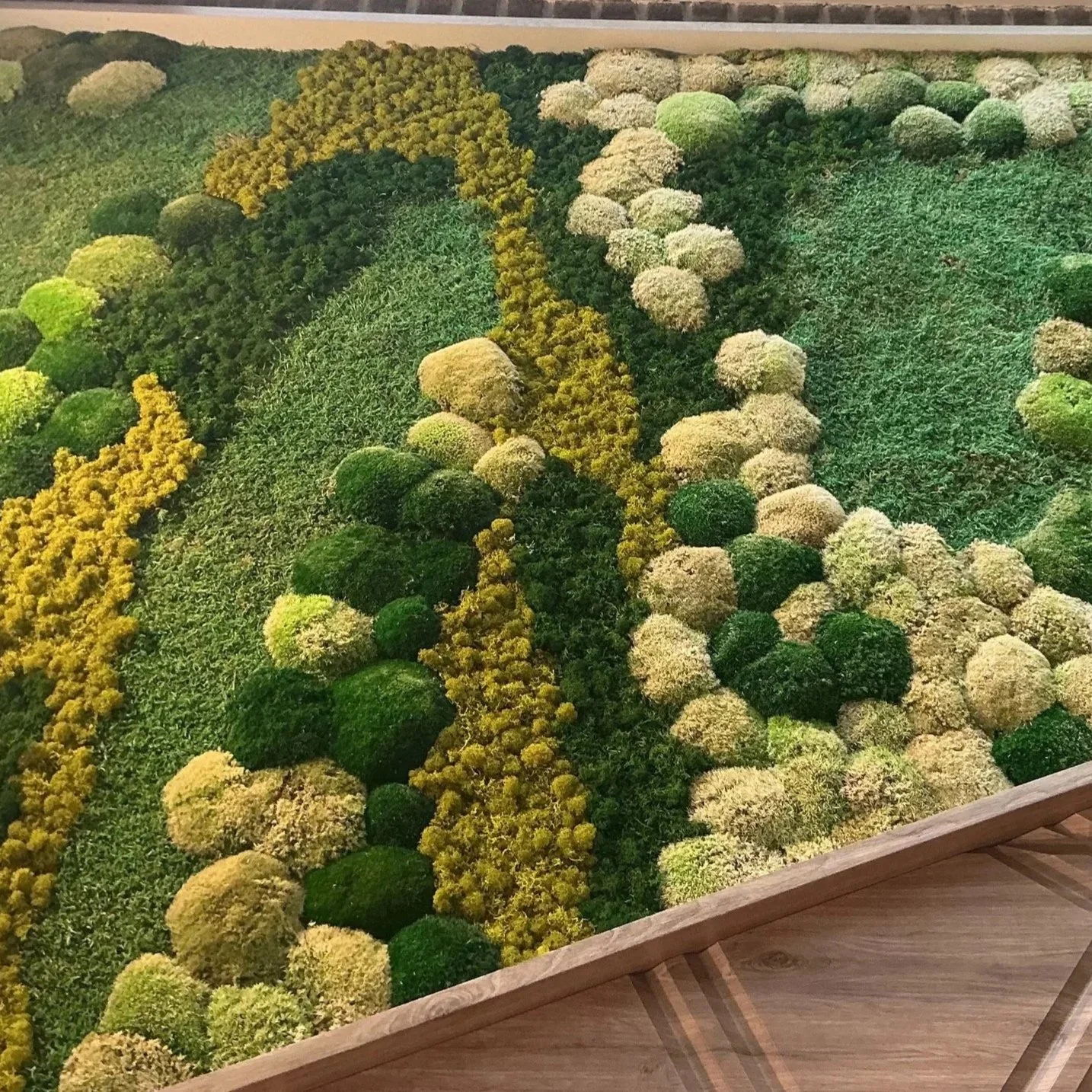
Holzgericht is Ceroavaono’s wood guild of the Black Forest, governing timber by grain, age, and witness. Nothing is cut without standing, and nothing leaves the forest without being counted.